
About Montessori
Montessori education is a child‑centred approach that nurtures independence, curiosity, and a lifelong love of learning. Developed by Dr Maria Montessori, it is based on the belief that children learn best through hands‑on exploration, freedom within clear boundaries, and meaningful work in a carefully prepared environment.
Montessori classrooms are calm, purposeful spaces where children choose activities that match their interests and developmental needs. Teachers guide rather than direct, helping each child grow at their own pace while developing confidence, responsibility, and respect for others.
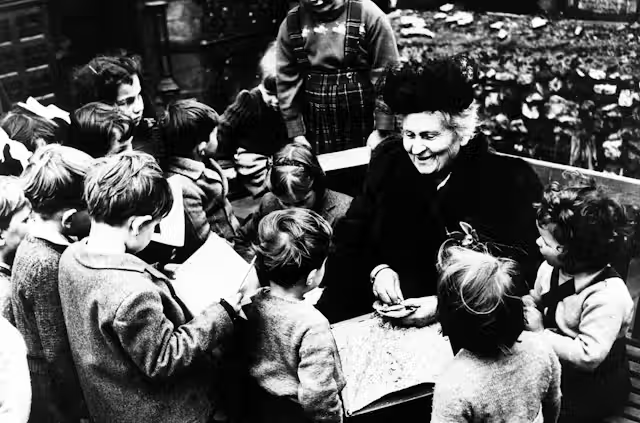
Dr Maria Montessori
Principles of Montessori Education
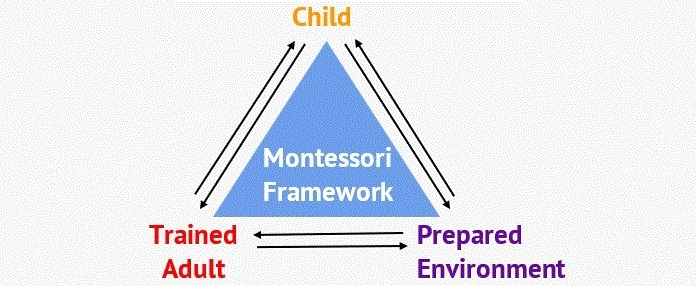
Montessori education is built upon three interdependent elements: the Child, the Prepared Environment, and the Trained Adult. Together, they form the foundation for learning guided by Montessori principles.
The Child
At the centre of Montessori education is the child, recognised as capable, curious, and intrinsically motivated to learn. In the 6–12 years, children develop a reasoning mind, a strong sense of justice, and a deep need for social connection. Your document highlights that “children choose their work within clear boundaries, allowing for self‑direction and personal growth.”
Multi‑age groupings foster leadership, collaboration, and tuakana–teina relationships, creating what you describe as “a mini practice society” where children learn from one another and develop empathy, confidence, and responsibility.
The Prepared Environment
The Montessori environment is intentionally designed to support independence, concentration, and exploration. Materials are arranged sequentially on open shelves, reflecting both the curriculum and the child’s need for order. As your document states, “The entire curriculum is physically laid out in the environment, allowing students to choose freely from purposeful work while progressing through increasingly complex concepts.”
For children aged 6–12, the environment extends beyond the classroom through real‑life experiences such as cooking, Going Out activities, and opportunities for meaningful project work.
The Trained Adult
In Montessori education, the adult serves as a guide who connects the child with the environment. Through specialised training, the adult learns to present materials, observe the child’s development, and respond thoughtfully to their needs. Your document emphasises that “Observation is central to our work… we gather data through careful observation, listen deeply, and use this insight to guide each child’s next step.”
Freedom is balanced with responsibility, and learning conversations support children in developing self‑discipline, reflective thinking, and wise decision‑making.
The Planes of Development
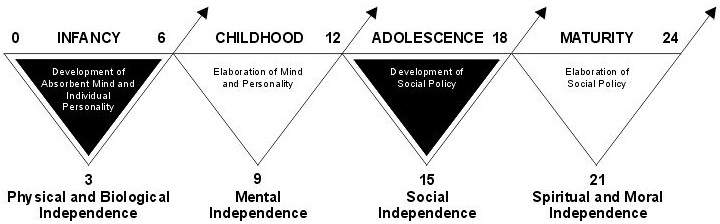
Dr Montessori identified four distinct planes of development, each characterised by unique physical, cognitive, social, and emotional needs. The 6–12 years—known as the Second Plane—is marked by intellectual curiosity, imagination, and moral development.
The Montessori Primary Years (Ages 6–12)
The 6–12 age group is a unique and exciting stage in Montessori education. Children in this period are imaginative, social, and eager to understand the world and their place in it.
Montessori primary classrooms support this through:
Children in this stage develop a deep desire to understand the world beyond themselves—exploring history, geography, science, and culture.
The Cosmic Curriculum
At the heart of Montessori primary education is the Cosmic Curriculum: a rich, interconnected exploration of the universe and humanity’s role within it. Through stories, timelines, experiments, and projects, children discover:
The Cosmic Curriculum helps children see how everything is connected, inspiring a sense of wonder, responsibility, and belonging in the world.
The curriculum in Room 9 is specifically designed to meet the needs of children in this plane, supporting exploration, collaborative work, independence, and the development of a strong moral compass.
Montessori at Tawa School
Manaaki Montessori is part of Tawa School and follows both Montessori principles and the New Zealand Curriculum. Room 9 is a calm, multi‑age learning environment where children aged 6–12 work together, support one another, and take an active role in their classroom community.
Our programme is supported by the Manaaki Montessori Education Trust (MMET), a volunteer group that helps provide materials, resources, and ongoing programme support. Together with Tawa School leadership, MMET ensures that Montessori education thrives within the wider school community.
Montessori vs Mainstream Education
Every child is unique, with different learning styles, interests, and needs. Both Montessori and mainstream education offer valuable experiences and can support children in meaningful ways. This comparison is not about which method is better, but rather about highlighting the distinct features of each approach—so families can make informed choices that best suit their child.
Here’s a side-by-side look at how Montessori education (as practiced at Manaaki Montessori) compares to mainstream schooling, focusing on the 6–12 age group: